
Maskura: Layered Process – Reflections by Purawai Vyas
December 2020
We are amidst the pandemic. I am invited to an online Nova Dance rehearsal process to learn a work. I am learning a piece called Maskura choreographed by Nova Bhattacharya, from a company dancer. There are other dancers online; they look like me, many of them trained in Bharatanatyam also. Some are joining in from Toronto, some from Vancouver. Even in this isolated time, I discover a community that I truly feel like I could be a part of. In the choreography, I see hand gestures from Bharatanatyam, and movement patterns that look familiar; but are different, and I am not sure what makes them different yet.
Amidst the pandemic in 2020, I experienced my dancing body in a new way. It was my first introduction to a contemporary dance work outside of school. Learning this work was freeing and felt surprisingly natural. However, I felt a resistance to any emotional narrative, as I was learning the solo exclusively as movement patterns void of any context on the meaning.
Spring 2025
I am on a walk with Nova. We visit the ROM and then later walk through art galleries and the streets of Yorkville. I eagerly ask questions about the creation process of Maskura. I have now seen the work as solo on video and in different ensemble iterations through Svāhā!. Nova generously shares the initial beginnings of the work. In the studio, we remount Maskura into an ensemble work for The National Ballet of Canada’s ‘Sharing the Stage’ program. There are three dancers trained in Bharatanatyam – Rachana Joshi, Neena Jayarajan and myself - and two contemporary dancers Mel Hart and Eillish Shin-Culhane.
I learned that the first public performance was at a cabaret bar. The first time Ed Hanley began to create the music was what inspired the creation process and elicited Nova’s motivation to think about the structure of a Varnam outside of traditional repertoire. I discvered how the words “pain” and “pleasure” were employed in the creation to provide an emotional throughline. This allowed me to visualize a clearer landscape for the piece. In the studio, I saw and deeply understood how the work sits on different bodies with different trainings. I began to see what stories were common amongst us and where they diverged into personal stories. I saw the power of shared trainings and the conviction of individual narratives.
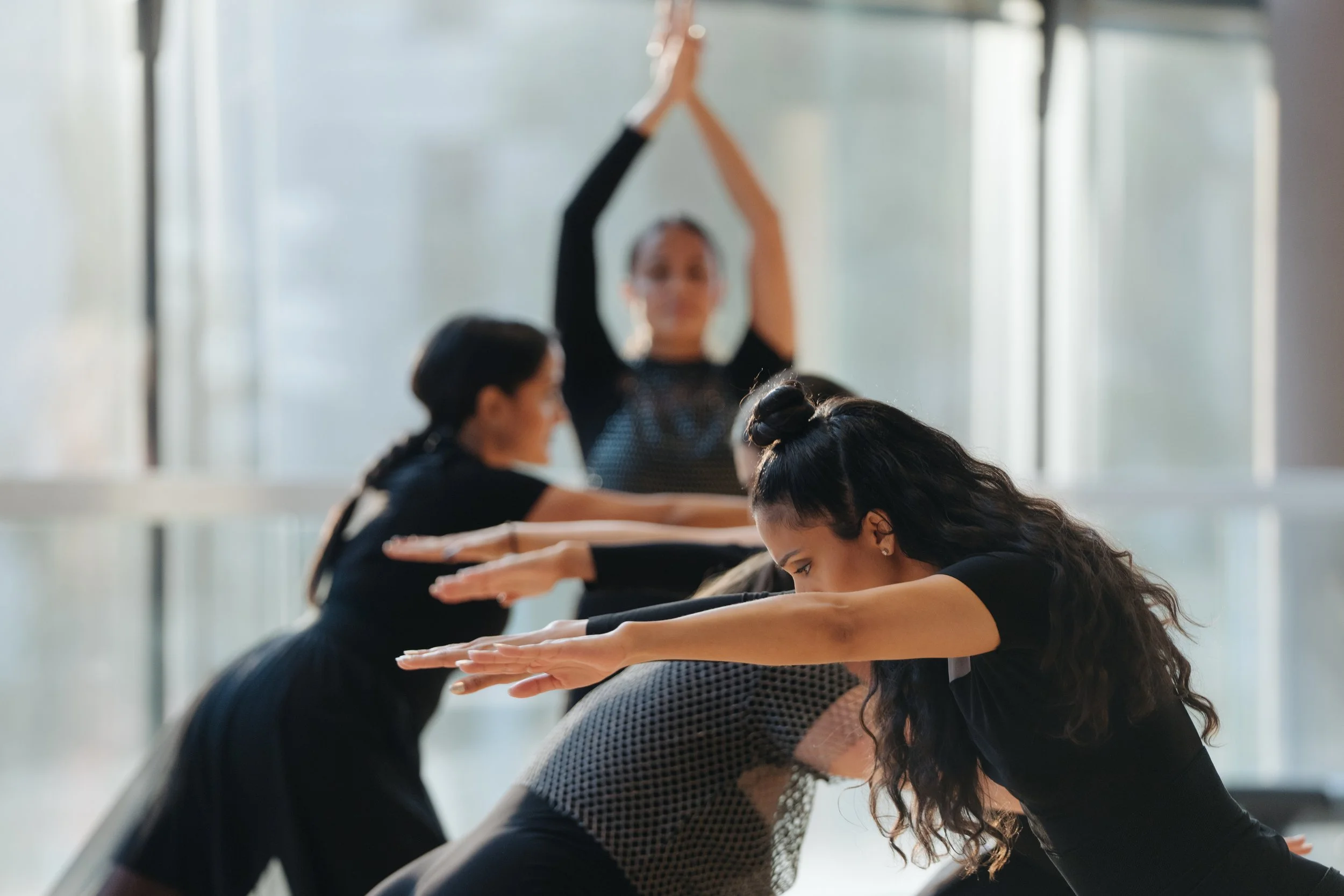
Photo by Karolina Kuras
August 2025
At Deep End Week 2025, I work on remounting Maskura as a solo work. I study different versions of the work since creation and all its different evolutions. Nova brings in the original costume, I am surprised that it is blue instead of black as it appears in the video. I receive notes from Nova as questions:
“What do you hold on to? What do you let go of? How does your training support you? How do you stay present with what the body holds, and how do you expand beyond it?”
“What do you want to reveal? What is the secret you are holidng, how do we be present and aware with gaze, a gaze - Drishti - that can see from different parts of your body.”
“How can we be intentional?”
I receive other notes: “Constant movement, always in motion; You are never waiting, always keeping the image or thought alive; echoes instead of punctuation; like butter.”
During the week, I am visited by Neena Jayarajan, who offers her reflections and experience on learning and performing the work as a senior dance of the company. She offers that the solo requires the dancer to bring authenticity and reflects the journey of the individual. It requires that individual to commit to their personal story each time rather than reproducing the choreographer’s vision or another dancer’s interpretation. Later in the week, I perform the complete solo as a part of the showing process.
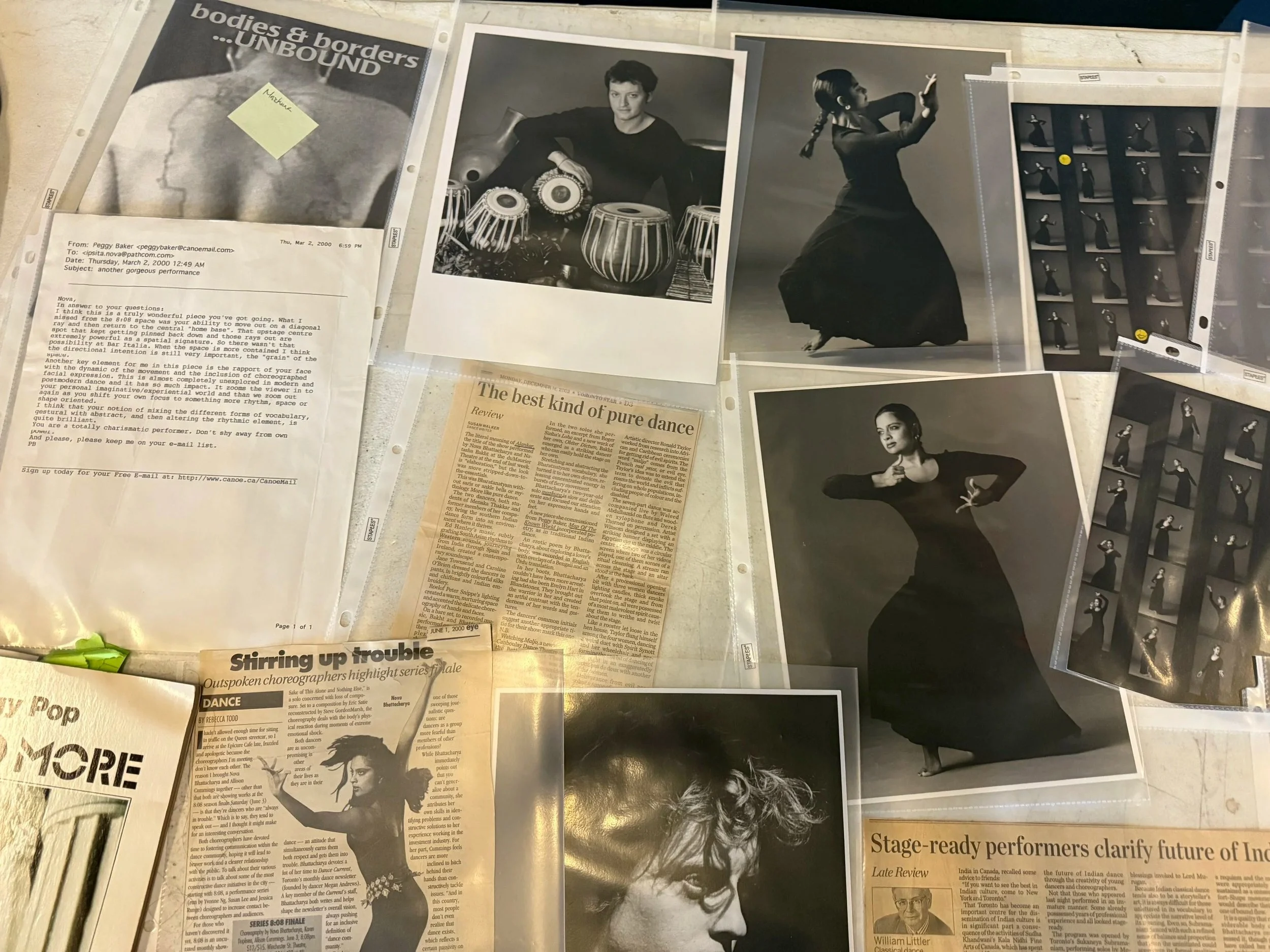
Photos by: Purawai Vyas
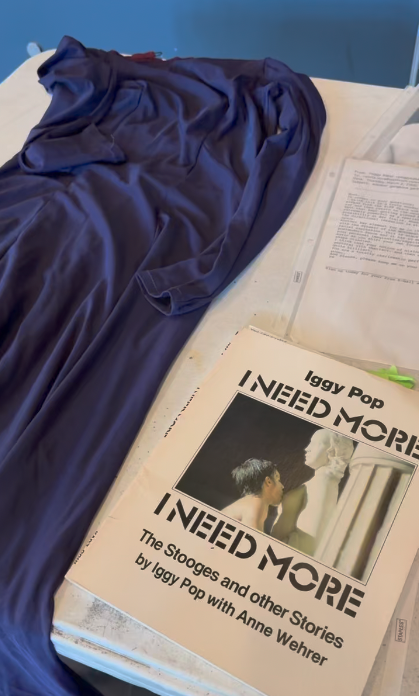
During Deep End Week, working on Maskura as a solo became an immersive process of navigating multiple internal and physical layers through a constant, searching practice. I found myself continually striving, while also confronting the realization that there is no fixed endpoint or final destination within the work. Instead, the process asked me to shift—toward slowing down, toward listening more closely to my own breath, and allowing that breath to guide the movement. Through this, I began to deepen my embodiment, learning to fully inhabit each gesture and transition rather than pushing past it. The experience became less about arriving somewhere and more about attuning to the present moment, finding clarity, resistance, and meaning within the unfolding process itself.
I realized that this piece requires my whole self; as dancer and as human - the entire history of my dancing body and human experience. I discovered that by committing to being inside the work as myself, an authentic and personal experience unfolded. The meaning of “Pain” and “Pleasure”, of “Love” and “Loss” grew deeper. I pondered: How do we wield the power of our own stories, how do we surrender to them?
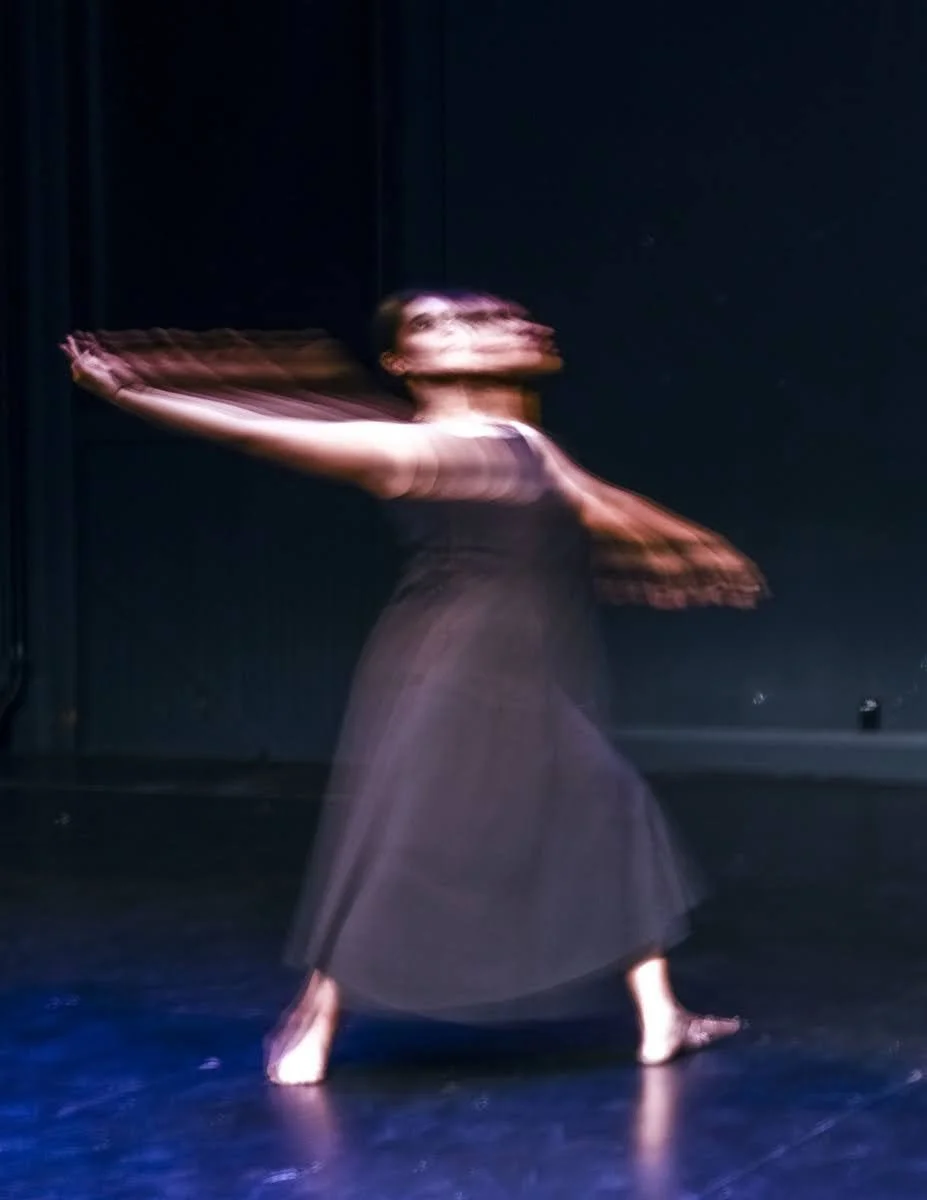
Photos by: Omer Yukseker
February 2026
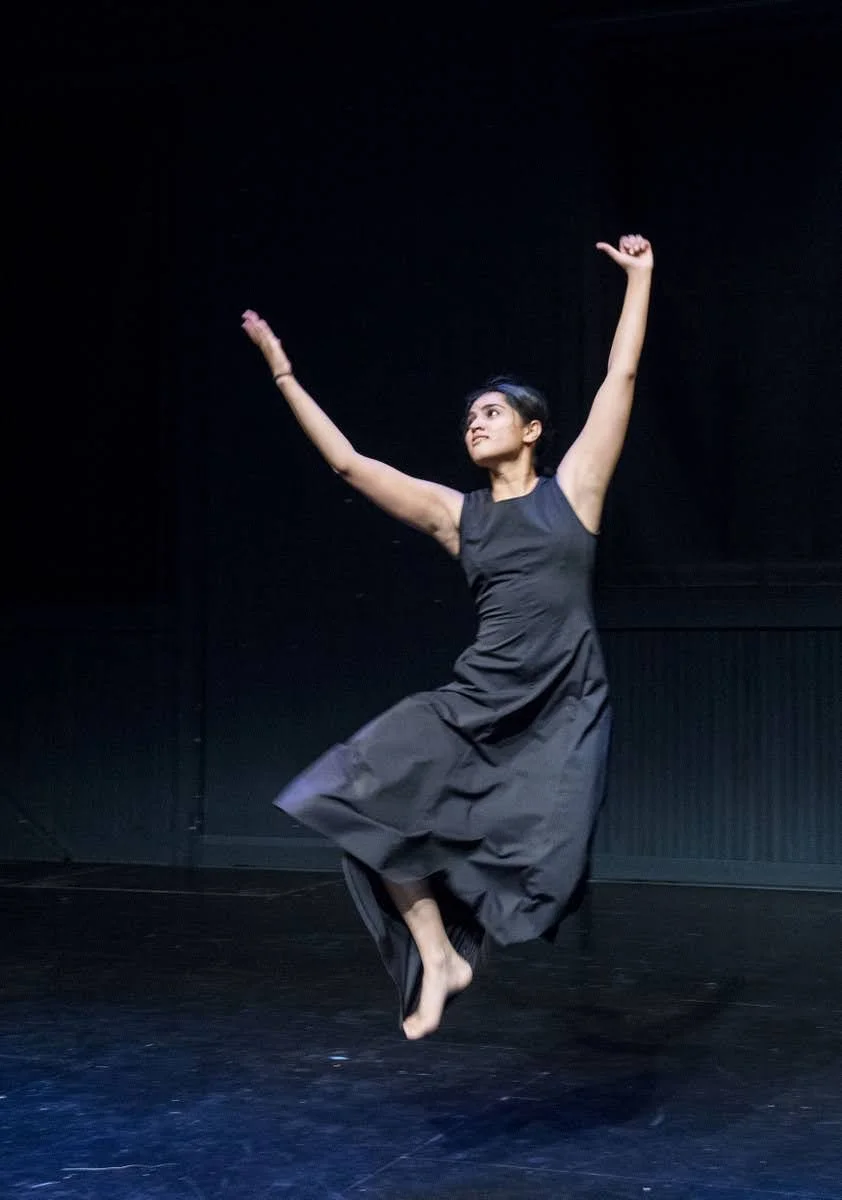
I see Maskura being absorbed by different bodies in space, some bodies trained in Bharatanatyam, some informed by western-contemporary dance practices who are curios to learn more about the form. In the room we have Mel Hart, Rajvi Dedhia, Kathiha Parthiban, Sasha Ashwini learning the work as a solo. We are in studio to help Sasha Ashwini prepare for her presentation of Maskura in Montreal. During the week, discover that this piece was originally dedicated to a Kathak dancer, Jahanara Aleqh, a Toronto-based Kathak dancer who was murdered in her home country. This influential figure in Nova’s life, moved her to dedicate the piece to Jahanara. The dance works with the ideas of ‘grief’, ‘loss’, and ‘pain’ but also ‘love’, ‘honor’ and ‘hope for a better future for artists’.
In this process, I began to see the intention of the work transpire; a personal story yet collective story resonate in each body. I saw a clear throughline beyond the choreographic movements. The work holds space for many stories to exist at once, or no story at all. Although the dancers were rehearsing a solo, they came together through their use of space and musical timing and through what they experienced internally. Each dancer held their own idea of ‘love and loss’ by striving to connect each movement and staying present with their personal story. They experimented with how to fill each gesture with meaning and I began to see how multiple stories can exist at once.
I realized for Bharatanatyam dancers, the challenge was to disrupt how we traditionally respond to music, and to let go of the musical line while remaining in the structure of the choreography. For non- Bharatanatyam dancers, the work enabled them to receive information about the world of Bharatanatyam and the dance form, without training in it in the traditional sense.
While working on Maskura, each layer at a time, I was challenged to find my own connections to ideas of “love and loss” and to stay present to each moment as I navigated from one idea to the next. As a dancer this experience has been extremely liberating. In a way, I am learning to accept myself, my emotional landscape, my dancing body in each moment, as I work through the movements in this piece. With a clearer understanding of the music, and the choreographic gestures, I find myself diving deeper into the emotional landscape, narrative, and how I choose to respond to the energy and space in each moment. Inadvertently, the dance becomes an emotional and personal journey. While navigating multiple layers and a constant search, I’m learning to release the need for an endpoint — slowing down, listening to my breath, and fully inhabiting each movement as I begin to find presence and meaning in the process itself.