
“Kali's Lament” - Reflections by Nova Bhattacharya
“Burlesque makes me brave” may seem like unexpected words from an artist known for decades of boundary breaking. Yet they open a fascinating window into Nova Bhattacharya’s creative world, where elements of Kuchipudi repertoire passed to her by Menaka Thakkar in the 1970s resurface in bold new ways on stage.
Nova Bhattacharya:
“Invited by Dainty Smith to present under the banner of Old Gods…Old Magick; with a Country music constraint my mind went to Johnny Cash’s version of Hurt by Nine Inch Nails. The lyrics of the song resonate uncannily with the philosophical terrain of Smashana Kali who dwells in the cremation ground, a place where the illusions of identity, achievement, and permanence are burned away. The repeated confrontation in the lyrics with pain, memory, and the question “What have I become?” mirrors the tantric confrontation with the self that occurs in the shmashana. In this landscape there is no social mask, no empire, no story left intact. The line “my empire of dirt” reads like a direct cremation ground metaphor. All structures of ego eventually reduce to ash. The lyric “Everyone I know goes away in the end” aligns with the central spiritual insight embodied by Smashana Kali: impermanence is a revelation. The cremation ground is where attachment dissolves and where the practitioner confronts the temporary nature of relationships, identity, and the body itself.
“Like the cremation ground, the stage becomes a place where illusion is both created and dismantled.”
Burlesque, in its own way, inhabits a similar territory. Beneath the glitter, tease, and spectacle lies an art form that plays directly with impermanence and identity. Costumes come on and off, personas appear and dissolve, and the performer reveals the constructed nature of the roles we inhabit. Like the cremation ground, the stage becomes a place where illusion is both created and dismantled. In that moment of revelation, the performer stands as something fleeting and alive; a body moving through time, breath, balance, and presence.
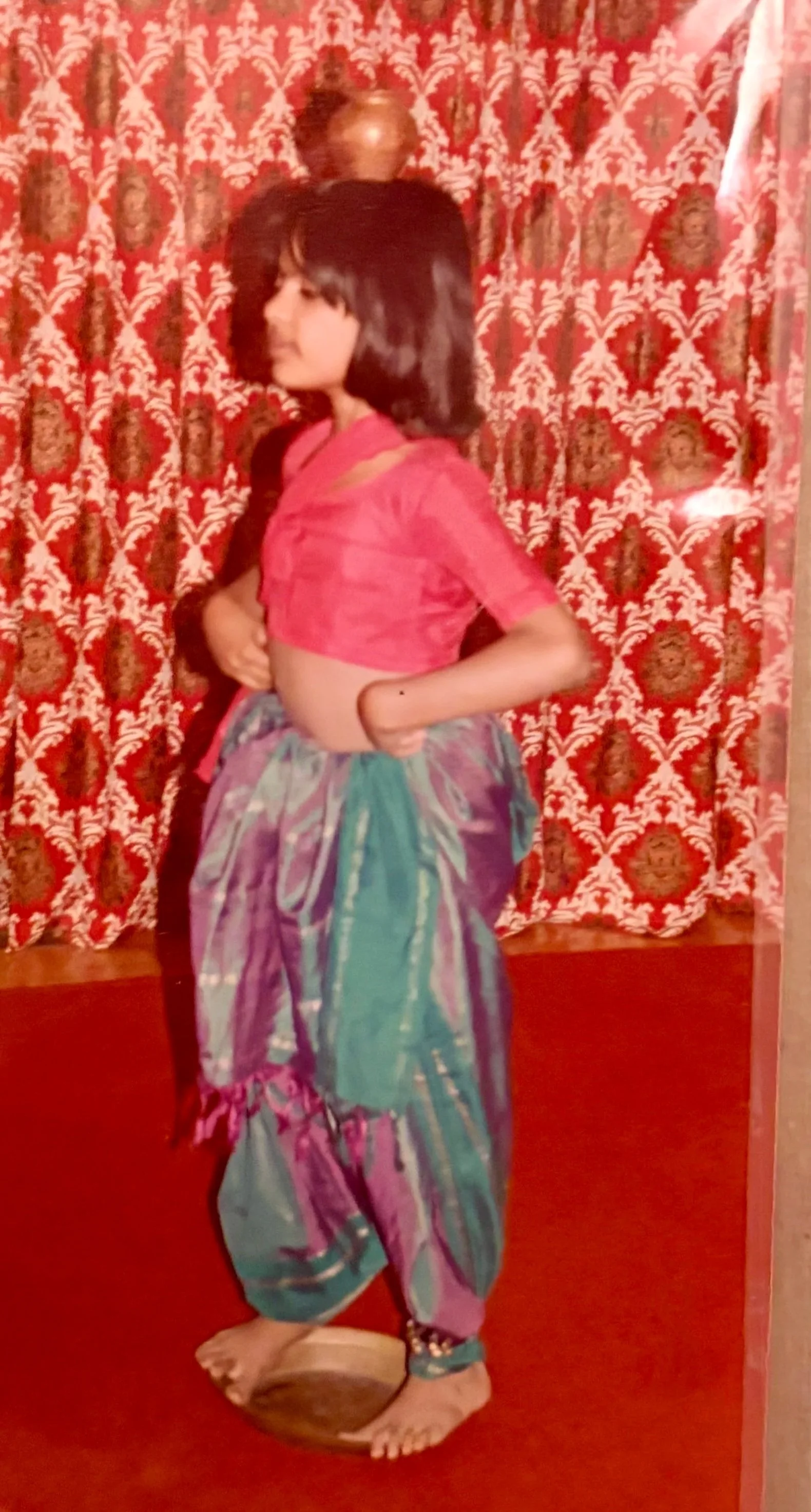
It was the imagery from the lyric “I wear this crown of thorns” that brought Tarangam to mind. In the Tarangam I learned, the dancer balances a pot of water on the head while dancing on the edge of a brass plate. The vessel sits like a crown, demanding extraordinary equilibrium while the body moves through complex rhythmic patterns.
With this work I thought the pot of water could suggest the burden of self-consciousness and guilt, with the plate echoing the precariousness of existence. Invoking a lineage of embodied risk through Tarangam through the grammar of burlesque, using the plate as a stage within a stage, and a replication of objectification. Where traditional Tarangam demonstrates surrender to Krishna, this iteration proposes surrender to the self. Stripping away Kali’s garland and using nudity as a costume is a risky proposition; and burlesque makes me brave enough to try it. Kali’s garland represents the liberation that comes when identities are cut away.”
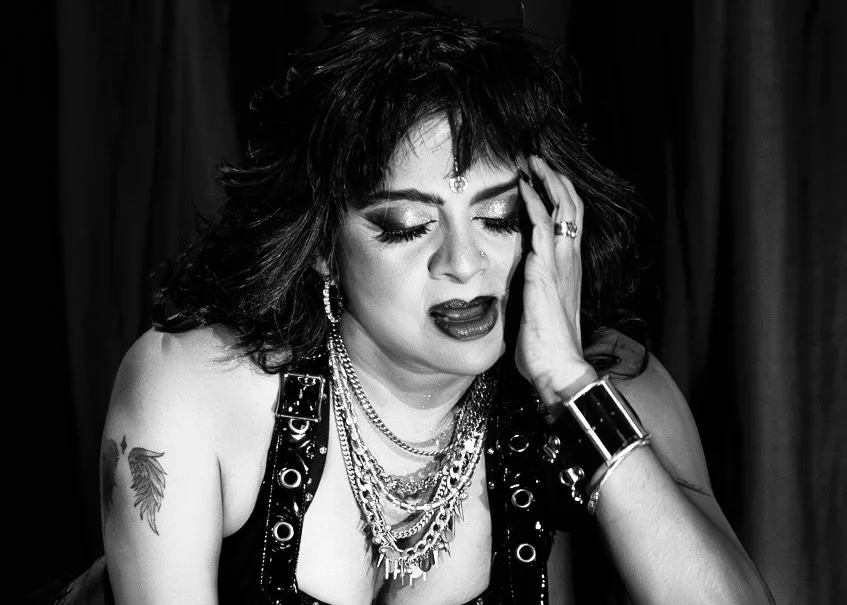
In Bhattacharya’s practice, tradition is never static. Forms inherited through lineage are continually tested, reimagined, and set alight through new encounters. Kali’s Lament brings her bravery and devotion together as an offering of power, vulnerability, and unapologetic presence.